

The Evolution of Woodworking: How Technology is Transforming the Craft
- Modern woodworking shops are becoming nearly dust-free thanks to advanced technology.
- Safety features in tools, like SawStop, have drastically reduced the risk of injury.
- Companies are innovating with automated tools and AI to streamline woodworking processes.
- The rise of CNC machines and 3D printers is changing how woodworkers design and create.
- Generative AI is becoming a valuable tool for research and design in woodworking.
In the world of woodworking, the past few decades have ushered in a wave of technological advancements that have transformed traditional practices. Gone are the days when workshops were filled with clouds of dust and the constant risk of injury. Today, woodworkers like Ryan Saunders marvel at how modern techniques have created environments that are not only cleaner but also significantly safer. "I've seen workshops that are nigh on dust-free," he states, highlighting the progress made in dust collection and air quality management in the industry.
The improvements in woodworking technology are largely due to a heightened awareness of health and safety. With more knowledge about the dangers posed by wood dust, innovations have emerged to protect the lungs of those who work with wood. High-pressure extractors and advanced filtration systems are now commonplace, ensuring that the air remains clean and safe for artisans. One notable innovation in this realm is a device from BlastGate.com, which was launched in 2024 by engineer and woodworker Chris de Jongh. This device optimizes dust collection, allowing woodshops to run their systems only when necessary, thus saving energy and improving efficiency. For one Dutch kitchen manufacturer, this system proved to be a wise investment, paying for itself within just six months.
Safety in woodworking has also seen significant advancements. The U.S. company SawStop has pioneered a technology that stops saw blades almost instantaneously upon detecting skin contact. This feature, which activates within five milliseconds, can prevent severe injuries, making a notable difference in the workshop environment. As Saunders puts it, "that is the difference between having a plaster and going to a plastic surgeon." Similarly, the German company Altendorf has introduced its Hand Guard technology, which employs cameras and artificial intelligence to detect when a hand approaches a blade too closely. As these companies continue to refine their safety features, they are working to eliminate false alarms that can cause unnecessary downtime.
Though the principles behind woodworking have remained consistent over the centuries, the tools themselves have undergone a profound transformation. Alex Marsh, director of operations at Pow, a nonprofit workshop in West London, notes that many modern machines would be unrecognizable to a woodworker from the 19th century. While the basic concepts of cutting and shaping wood are still relevant, the integration of digital components has changed the landscape. Large machines like laser cutters and computer numerical control (CNC) routers have become staples in many workshops. Marsh points out that recent advancements in software have made these machines easier to use, broadening the range of people who can operate them and expanding the processes they can perform.
The affordability of advanced technology is also improving. Companies like Shaper are producing compact, handheld CNC routers, which allow for easier scanning and designing before cutting. However, the initial costs of such advanced equipment can still be a barrier for many woodworkers, despite the potential for long-term savings and efficiency gains. The initial investment in technology can be daunting, but as the market for woodworking tools grows, prices are gradually becoming more accessible, enabling a broader audience to engage with these innovations.
Another significant trend in woodworking is the integration of artificial intelligence into design and material management. AI is proving to be a valuable assistant in the creative process, allowing woodworkers to streamline their workflows. For instance, Saunders has used a chatbot to quickly access building regulations during home renovations, demonstrating how AI can assist in practical applications. Nevertheless, he cautions his students against relying solely on AI, urging them to verify their findings through hands-on experience with materials and tools. This balance underscores the importance of traditional craftsmanship in an age increasingly dominated by technology.
In the film industry, propmaker Mark Vasilkov has experienced the benefits of advanced technology firsthand. He frequently works with wood, particularly in creating set designs that incorporate laser-cut plywood. Vasilkov has found that the larger the project, the more likely it is to involve wood, emphasizing its integral role in various creative endeavors. The AI image generator Stable Diffusion has become an invaluable tool for him, offering multiple design options to present to the art department before the construction phase begins. This intersection of technology and creativity exemplifies how woodworking is evolving, with new tools enhancing rather than replacing traditional methods.
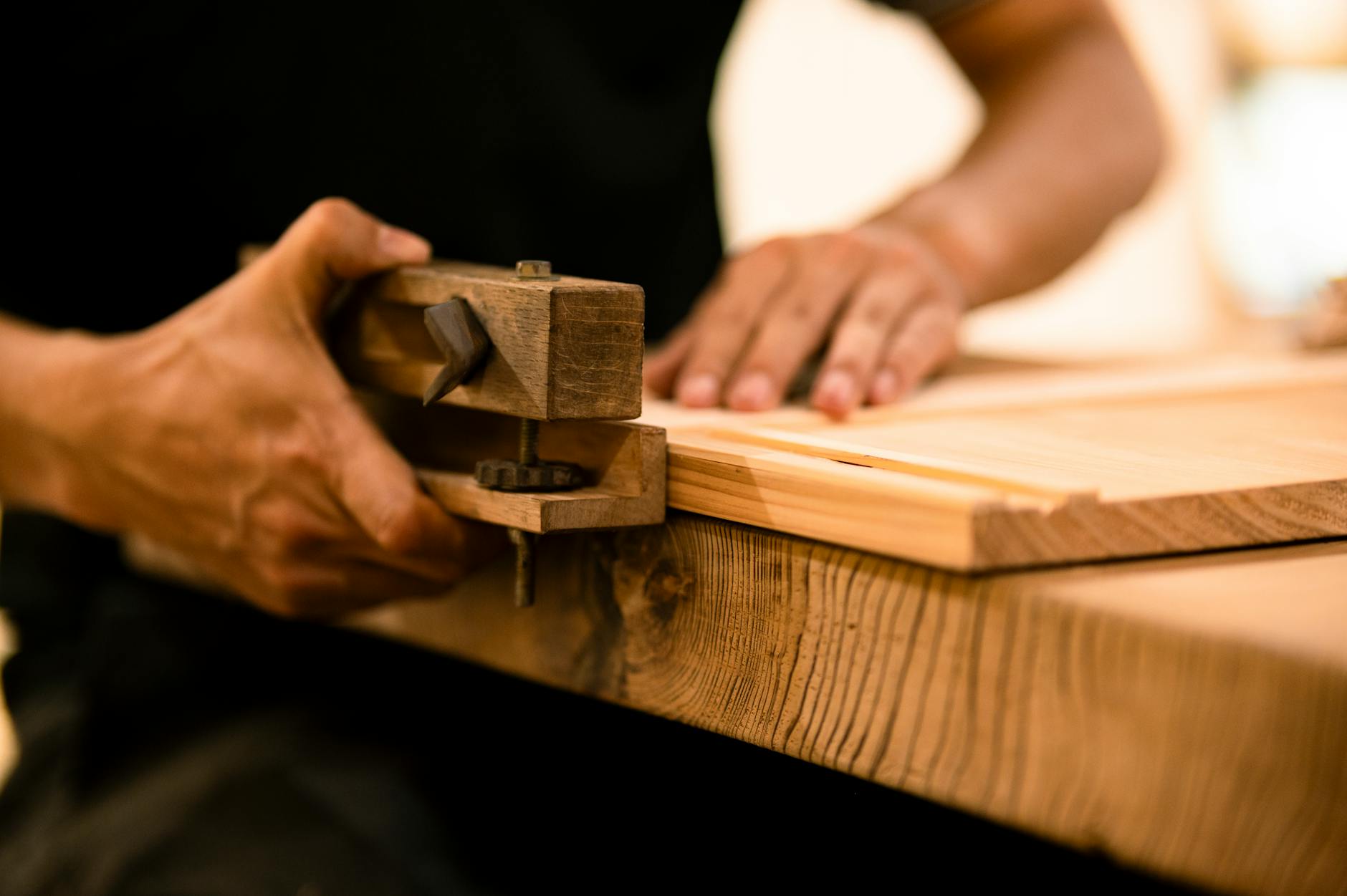
While technology continues to evolve, some woodworkers still cherish the analogue aspects of their craft. Saunders, for example, expresses a preference for traditional methods, stating that the digital age can sometimes diminish the personal touch in woodworking. He believes that the human interaction involved in the craft is essential and that an over-reliance on digital tools can lead to a disconnect from the materials themselves. This sentiment reflects a broader debate within the woodworking community about the balance between embracing innovation and preserving the artistry of traditional techniques.
As technology pushes the boundaries of what is possible in woodworking, one particularly exciting innovation is the emergence of automated construction solutions. The UK-based company Automated Architecture has developed a microfactory that can be shipped to building sites within a shipping container. This factory houses a robot capable of constructing all the timber panels required for a typical home within a single day. According to co-founder Mollie Claypool, the software accompanying the robot can convert housing designs into operational instructions, making the process efficient and streamlined. Claypool believes that this automation will not threaten the livelihoods of carpenters, as the focus remains on creating the structure rather than replacing the craftsmanship involved in finishing touches. This reflects a growing trend in the industry where automation is seen as a complement to human skill rather than a replacement.
The woodworking industry is at a fascinating crossroads, where tradition meets innovation. While many woodworkers embrace the new tools and technologies that enhance their craft, there remains a strong appreciation for the skills and techniques that have been passed down through generations. As the industry continues to evolve, it will be intriguing to see how these advancements shape the future of woodworking, blending the old with the new in ways that honor the craft while pushing it forward. The challenge moving forward will be to maintain the essence of woodworking as a creative and artisanal endeavor while incorporating the efficiencies and capabilities that modern technology offers.